Choosing a maternity hospital is one of the biggest decisions you'll make during your pregnancy journey. So, what makes a hospital the "best"? The honest answer is that it's the one that feels right for you—a place that aligns with your birth plan, medical needs, and personal comfort. It’s less about a single top-ranking facility and more about finding the perfect fit for your growing family.
How to Find the Best Maternity Hospital for You
Navigating the healthcare system to find the ideal place to welcome your baby can feel like a mammoth task. From clinical safety records to the atmosphere of the birthing suites, the sheer number of factors can be overwhelming. Think of this guide as your roadmap, breaking the process down into clear, manageable steps.
We’ll start by looking at the official standards for healthcare in England, helping you understand how to use data to inform your choice. Once you’ve got the fundamentals down, we'll move on to the finer details. By the end, you'll feel confident and empowered, ready to choose the perfect setting for your delivery.
Starting with Official Quality Ratings
Your first port of call should always be the Care Quality Commission (CQC) ratings. The CQC is the independent regulator of health and social care in England, and its reports offer an unbiased look at a hospital's performance. They inspect services and provide a rating, giving you a solid baseline for quality and safety.
But the picture of maternity care across the country isn't always straightforward. In fact, recent CQC data shows that only 2% of NHS maternity units in England currently hold an ‘Outstanding’ rating. While another 35% are rated ‘Good’, a worrying 63% are listed as either ‘Requires Improvement’ or ‘Inadequate’, highlighting widespread challenges.
This information isn't meant to cause alarm, but to show just how vital it is to do your own research. A CQC rating is a crucial starting point, but it's just one piece of a much larger puzzle. It tells you if a hospital meets foundational standards, but it doesn’t tell you if it’s the right hospital for you.
A hospital can have an excellent overall rating, but its maternity wing might have specific strengths or weaknesses that matter to your birth plan. Looking beyond the headline score is essential.
Considering your options also means understanding the different models of care available. While most families use the NHS, some explore private healthcare for a more personalised experience. Knowing what is private healthcare can help you decide which path best fits your expectations for comfort, continuity of care, and amenities. This choice will fundamentally shape your search from the very beginning.
To help you keep track of all the moving parts, here’s a quick-reference table outlining the key factors to consider.
Key Factors for Evaluating Maternity Hospitals At a Glance
This table summarises the most important criteria to weigh up when making your decision.
Ultimately, using these factors as a checklist will help you compare different hospitals systematically and find the one that truly feels like the safest, most supportive place to start your family's next chapter.
What Makes a Maternity Hospital Truly Great
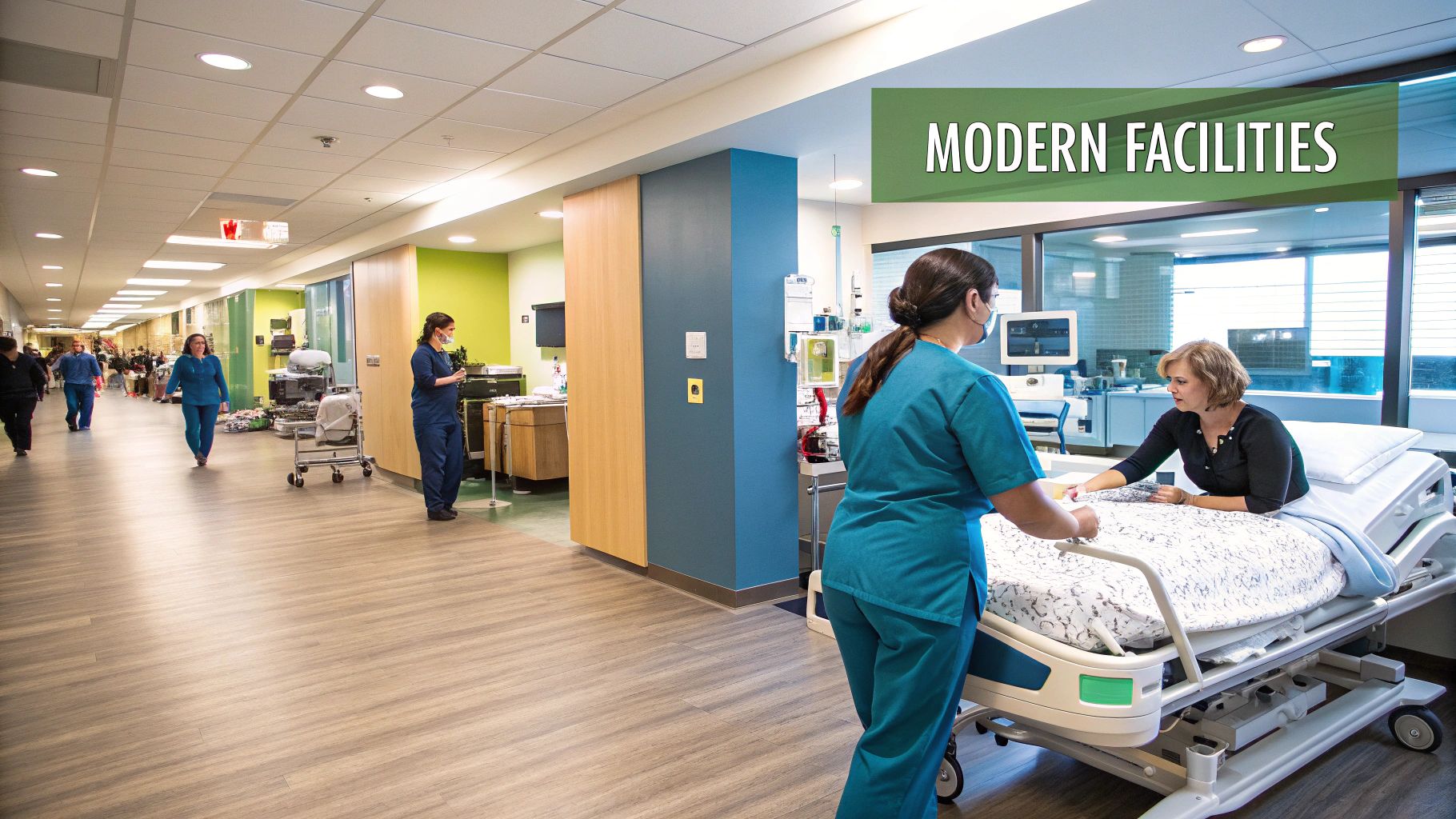
An ‘Outstanding’ CQC rating is a brilliant starting point, but it doesn’t paint the full picture. The things that make a maternity hospital exceptional go far beyond a single score. It’s a mix of first-class clinical care, deeply personal support, and a culture that respects your individual choices.
Think of it like choosing a school. One might have stellar exam results, but what really matters is the teaching style, how they support each student, and the overall feel of the place. It's the same with a hospital. You need rock-solid safety protocols, but you also want a compassionate, empowering atmosphere for one of the biggest moments of your life.
The Pillars of Clinical Excellence and Safety
At its heart, a top-tier maternity hospital is a fortress of safety. This foundation is built on robust clinical procedures, experienced staff, and the right equipment to handle any scenario. It’s the non-negotiable part of care that allows you to feel secure and focus on your baby.
One of the most critical factors is having specialist care right on hand. If a pregnancy is high-risk or complications arise unexpectedly, immediate access to a Neonatal Intensive Care Unit (NICU) is absolutely vital. The ‘level’ of the NICU tells you how complex the care it can provide for premature or unwell newborns.
Beyond the emergency facilities, look at the staffing. Low patient-to-midwife ratios are a fantastic indicator of quality. It means more one-on-one support during labour, which can make a huge difference to your birth experience and the outcome.
"Patient safety and quality care is our top priority... This recognition is the result of our commitment to implementing evidence-based best practices and improving maternal health." - Dr. Stacey Holman, OB/GYN
This dedication to evidence-based practice means the hospital isn’t just following old habits; it’s actively using the latest research to give every mother and baby the safest, most effective care. It’s a constant cycle of learning and improving that really sets the best hospitals apart.
Aligning with Your Birth Philosophy
While safety comes first, your comfort and choices are just as important. The best hospitals know there’s no "one-size-fits-all" way to give birth. They act as your partners, offering a whole spectrum of options and respecting your wishes every step of the way.
A hospital’s philosophy on birth is a key differentiator. It's worth asking about their approach to:
- Low-Intervention Births: Do they actively support natural birth plans? Do they have facilities like birthing pools and encourage active birth techniques under midwife-led care?
- Pain Management: What are your options? A great hospital provides everything from epidurals and pethidine to non-medical alternatives like gas and air, TENS machines, and hypnobirthing support.
- Caesarean Section Rates: Ask about their rates for both emergency and planned C-sections. This can give you some insight into their typical approach to intervention.
This focus on choice should cover everything from your prenatal checks to postnatal recovery. It's also worth seeing how maternity services connect with other specialities. Continuity of care is key, and many leading hospitals offer integrated gynaecology services to provide seamless support throughout a woman's life.
The Importance of Postnatal Support
The care you receive after the baby arrives is just as crucial as the delivery itself. Those first few days and weeks are a time of massive physical and emotional adjustment, and the right hospital support can make all the difference.
Top-tier maternity units place a huge emphasis on postnatal care. This means giving you enough time to recover, offering comfortable and private rooms where possible, and having midwives and healthcare assistants available around the clock.
One of the most valuable services is lactation support. Having access to qualified lactation consultants can be a complete game-changer for new mothers. A truly great hospital provides invaluable resources, including guidance and support on the top breastfeeding tips for new moms. This helps build your confidence and gives your baby the best possible start. Ultimately, this complete circle of care—from clinical safety to postnatal support—is what makes a maternity hospital truly exceptional.
Decoding CQC Ratings and Hospital Performance Data
Trying to make sense of official hospital reports can feel like wading through treacle. They’re often packed with clinical jargon and dense data that seem designed to confuse rather than clarify. But stick with it, because this is where you’ll find the real story behind a hospital’s glossy brochure.
Think of it like learning to read a map. At first, it’s just a confusing mess of lines and symbols. But once you understand what the key, the scale, and the terrain markers mean, you can navigate any landscape with confidence. Let's give you the tools to read the "map" of maternity care quality, so you can make a choice based on solid evidence, not just a gut feeling.
What to Look for in a CQC Report
The Care Quality Commission (CQC) is the independent regulator for all health and social care services in England. Their reports are the gold standard for judging quality, but you need to know what you’re looking for. The CQC assesses every service against five core questions, giving you a 360-degree view of a hospital's performance.
When you’re looking at a maternity unit’s report, zone in on these five areas:
- Safe: Are you protected from avoidable harm and abuse? This covers everything from hygiene and infection control to safe staffing levels. A rating of "Good" or "Outstanding" here is non-negotiable.
- Effective: Does the care actually work? This looks at whether the hospital follows best-practice guidelines to achieve good outcomes for mothers and babies.
- Caring: Are you treated with compassion, kindness, and respect? This is the human element – how the staff make you feel during one of the most vulnerable times of your life.
- Responsive: Are services set up to meet your needs? This covers things like waiting times, how easy it is to get care, and whether the hospital listens to and acts on patient feedback.
- Well-led: Is the leadership effective? This checks if the organisation has a positive, supportive culture where high-quality care is the priority and continuous improvement is encouraged.
You can find all these reports directly on the CQC's website. The homepage has a simple search bar where you can type in the name of any hospital, care home, or GP surgery in England.

The screenshot above shows you where to start your search. But a word of advice: don't just glance at the overall rating. Click through to the detailed report and find the specific findings for maternity services, as these can be quite different from the hospital’s general score. You can learn more in our detailed guide on understanding CQC ratings.
Going Beyond the Headline Rating
A CQC rating is a brilliant starting point, but it's not the whole story. For a much deeper dive into the clinical nuts and bolts, the National Maternity and Perinatal Audit (NMPA) is an incredible resource.
If the CQC report is the overall exam grade, think of the NMPA as the detailed marks for each individual subject. It collects data every year from maternity services across the UK, allowing hospitals to see exactly how they stack up against national averages on very specific clinical outcomes. This is where you can compare things that directly impact mothers and babies, like rates of severe tearing during birth or maternal readmissions to hospital.
While one single number never defines a hospital's quality, this data gives you a powerful, evidence-based look at its actual performance.
By combining the CQC's broad assessment with the NMPA's specific clinical data, you build a three-dimensional picture of a hospital's quality. You move from a general impression to a detailed, evidence-backed understanding.
This two-pronged approach gives you the confidence to look past a shiny "Outstanding" rating and ask the right questions. When you go for a hospital tour, you can ask things like, "I saw your NMPA data on X; can you tell me a bit more about your approach to that?"
This is what separates a hopeful choice from a truly informed one, making sure you find a hospital that isn’t just good on paper, but is genuinely the best fit for you and your baby.
The Human Element of Maternity Care
Clinical data and performance metrics are vital, but they only tell half the story. The other half is deeply personal. A hospital might tick every box for safety, but if the atmosphere feels cold or the staff seem rushed, it just might not be the right fit for you. This is the human element—the culture, communication, and compassion that will ultimately shape your entire birth experience.
Think of it like choosing a restaurant. One might have a Michelin star (the maternity equivalent of an 'Outstanding' CQC rating), but you also want to know if the service is warm and the vibe makes you feel relaxed. For your birth, this atmosphere is even more critical. It’s about feeling heard, respected, and fundamentally safe in the hands of the people caring for you.
Gauging a Hospital's Culture and Atmosphere
A hospital's culture isn't something you can find in a report. It’s the unspoken energy of the place, reflected in every interaction from the reception desk to the delivery room. It’s the way a midwife really listens to your concerns or the patience a consultant shows when explaining a procedure.
The best way to get a feel for this is to experience it yourself. Hospital tours, whether in-person or virtual, are invaluable. They let you see the facilities, meet a few of the staff, and get your questions answered. A tour helps you move from an abstract idea of a hospital to a real sense of what it would be like to give birth there.
During a tour, keep an eye on these subtle but important details:
- Staff Interactions: Do the midwives and doctors seem to work well together? A positive, collaborative team dynamic almost always translates to better patient care.
- Atmosphere on the Ward: Does the maternity ward feel calm and organised, or does it feel chaotic and stressed? That environment will have a direct impact on your state of mind.
- Patient-Centred Language: Listen to how the staff talk about birth. Do they use empowering, respectful language that puts you at the centre of your own experience?
By observing these things, you can build a picture of whether a hospital’s culture aligns with what you need. It’s also a great idea to look up the clinical teams on their websites; learning about the team behind the care can provide a huge amount of reassurance.
The Realistic Context of UK Maternity Services
It’s also important to be realistic. UK maternity services are facing some serious challenges right now. A 2025 review by the Healthcare Safety Investigation Branch (HSSIB) highlighted that high-profile failures in some units have shaken public confidence and staff morale. This can sometimes lead to a more risk-averse culture among clinicians, which is a useful thing for families to be aware of.
This isn’t meant to scare you, but to empower you with the full picture. Understanding these pressures helps you ask better questions and appreciate the incredible work midwives and doctors do under tough circumstances.
Trust your gut just as much as your research. If a hospital looks perfect on paper but doesn't feel right, it's okay to keep looking. The emotional connection you feel to your chosen birthplace is a valid and vital part of the decision.
Ultimately, the human element is about finding a place where you feel both physically and emotionally supported. A key part of this is a hospital's commitment to the wellbeing of new mothers, including providing resources for understanding women's mental health during pregnancy. When you combine strong clinical data with a compassionate environment, you find a hospital that isn’t just good, but truly right for you.
Building Your Personalised Hospital Checklist
After weeks of research, tours, and poring over reports, you’re probably sitting on a mountain of information. It's time to sift through it all and make a clear, confident decision. The best way to do that? Create a personalised checklist to compare your top choices side-by-side, based on what truly matters to you.
Think of it like planning a big holiday. You wouldn't just book the first hotel you see. You'd compare them on location, what they offer, and what others say to find the perfect fit. Your hospital choice deserves that same careful thought. It turns a potentially overwhelming decision into an organised, empowering process. This checklist will be your final tool for clarity.
Organising Your Priorities
The most effective way to compare hospitals is to break your needs down into a few key categories. This helps you weigh different factors logically and makes sure you don't miss anything important. It’s all about getting a balanced view that considers both the practicalities and the personal experience you’re hoping for.
Start by creating four main sections for your checklist. Think of these as the pillars of your decision:
- Logistics and Practicalities: The day-to-day things that can seriously impact your stress levels.
- Your Birth Preferences: The elements that will shape your labour and delivery experience.
- Postnatal and Recovery Care: What happens in those crucial hours and days after your baby arrives.
- Clinical and Emergency Facilities: The medical safety net you need, just in case.
By structuring your thoughts this way, you can quickly see where one hospital shines over another in the areas that mean the most to you and your family. It stops you from being swayed by one shiny feature, like a fancy delivery room, while forgetting to check their policy on postnatal support.
Key Questions for Each Category
Now, let's fill those categories with specific, actionable questions. This isn't just a list; it’s a set of prompts to help you dig deeper into what each hospital really offers.
Logistics and Practicalities
- How long is the drive in rush-hour traffic? (Do a test run!)
- Is parking easy to find and affordable for partners?
- What are the visiting hours for partners, family, and other children?
Your Birth Preferences
- Are there midwife-led units or birthing pools available? How often are they actually used?
- What is the hospital's approach to pain relief options like epidurals?
- What is their typical stance on induction and caesarean sections?
Postnatal and Recovery Care
- Are private postnatal rooms available, and what’s the cost?
- Is there dedicated support from lactation consultants on hand?
- What's the average length of stay for a straightforward birth?
Clinical and Emergency Facilities
- What level of Neonatal Intensive Care Unit (NICU) do they have on-site?
- Is a consultant anaesthetist available 24/7?
- How do they handle emergency situations during labour?
Creating this checklist is about translating your research into a personal scorecard. It ensures your final choice is based not just on a hospital's reputation, but on how well it aligns with your specific, individual needs.
For those considering a private option like The Vesey, it's particularly important to get clear answers on these points. You can often find detailed breakdowns by exploring the hospital's patient information resources, which will help you fill in your checklist with confidence. And of course, financial considerations are a huge part of the puzzle.
The infographic below shows just how much factors like cost and insurance coverage can vary between hospitals.
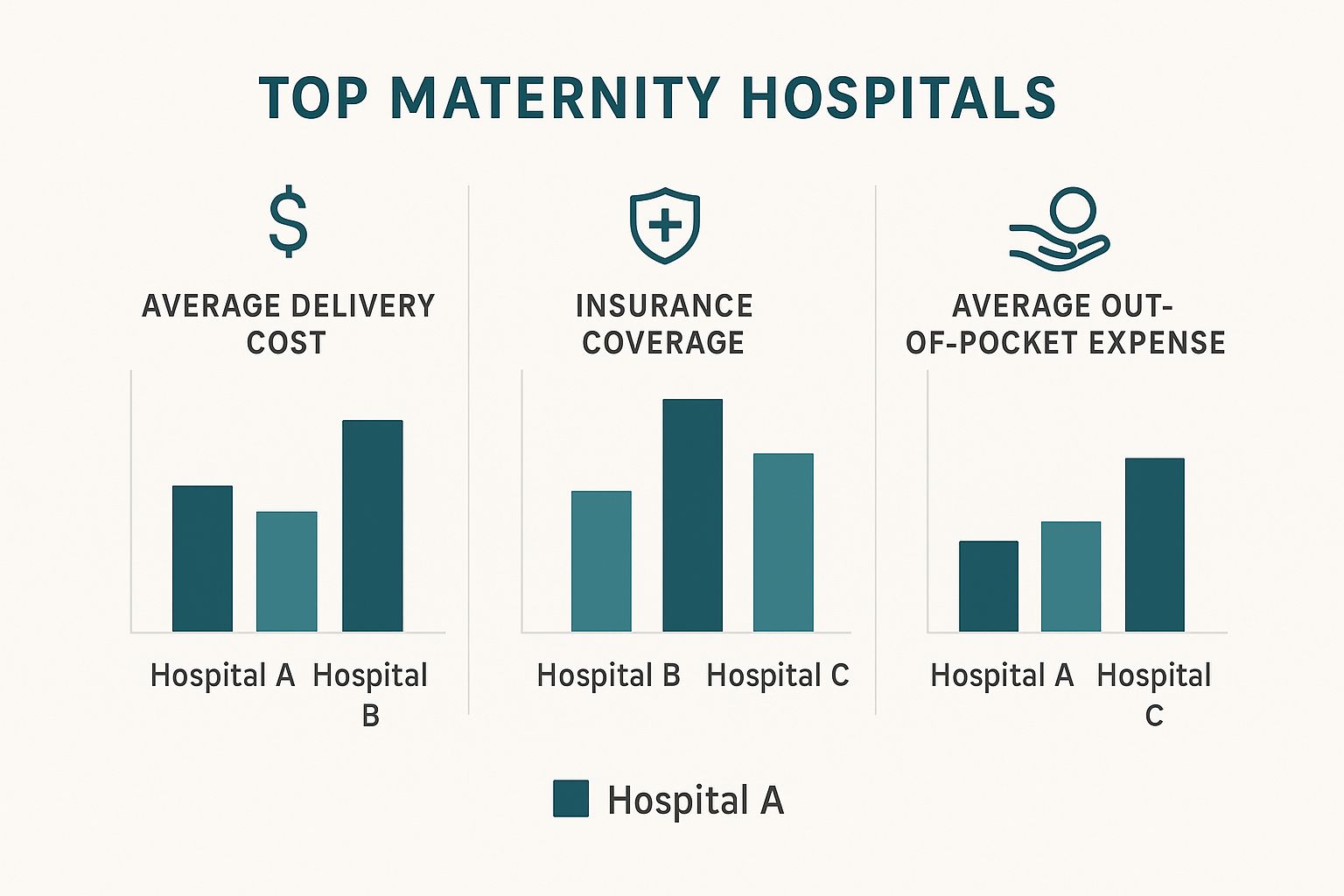
As you can see, a hospital with a lower delivery cost might not actually be the most affordable option if your insurance provides less cover, leaving you with higher out-of-pocket expenses. Once you've gathered all this info, you can score each hospital. This final step will reveal the facility that isn't just one of the best around, but the very best one for you.
Your Personal Maternity Hospital Evaluation Checklist
To make this even easier, use the simple table below. Print it out or copy it into a notebook for each of your shortlisted hospitals. Jot down the answers you find and add your own notes and gut feelings.
This structured approach takes the emotion out of the comparison phase, leaving you with a data-driven decision you can feel truly good about. Happy hunting
Frequently Asked Questions About Choosing a Hospital

Choosing where you’ll welcome your baby into the world is a huge decision, and it’s completely normal to have a long list of questions. To help you feel more confident, we've put together clear, straightforward answers to some of the most common queries we hear from expectant parents.
Think of this as your practical guide to navigating the system, from understanding different types of care to knowing your rights as a patient. Our goal is to clear up any confusion so you can make the best choice for you and your family.
What Is the Difference Between a Midwife-Led and a Consultant-Led Unit?
One of the first things you’ll probably be asked to consider is whether you’d prefer a midwife-led unit (MLU) or a consultant-led one. It’s a bit like choosing between a cosy boutique B&B and a large, full-service hotel. Both are brilliant, but they offer very different experiences.
A midwife-led unit is specifically designed for straightforward, low-risk pregnancies. The environment is much more relaxed and home-like, often with birthing pools and equipment to support an active labour. Here, the focus is on a natural, low-intervention birth, with highly skilled midwives managing all of your care. They can be located within a hospital or as standalone centres.
A consultant-led unit is what most people picture as a traditional labour ward. It's based inside a main hospital and is staffed by a full team of midwives, obstetricians (doctors who specialise in childbirth), anaesthetists, and other specialists. This is the go-to choice if you have a higher-risk pregnancy or if you know you want the option of an epidural, as medical support is on hand 24/7.
The real difference comes down to the level of medical support that’s immediately available. Your midwife is the best person to help you weigh up your personal circumstances and decide which setting is the safest and most suitable for you and your baby.
Getting your head around this distinction is the first step to finding a hospital that truly matches your birth preferences and medical needs.
Can I Choose a Hospital Outside My Local Area?
Yes, you absolutely can. Under the NHS, you have the right to choose which hospital you are referred to for your maternity care. It’s a game-changer that many parents don't realise they have.
While sticking with your nearest hospital is often the most convenient option, you are not tied to it. This freedom is especially important if:
- Your local hospital has a less-than-glowing CQC report for its maternity services.
- A hospital further away has specialist facilities, like a higher-level neonatal intensive care unit (NICU).
- Another hospital’s approach to birth and patient care simply feels like a better fit for you.
Of course, you’ll want to think about the practical side of things, like how long it will take to get there in labour. But if another hospital offers something that’s really important to you, it is well within your rights to ask for that referral.
How Early Should I Decide on a Hospital?
It's a really good idea to start looking into your hospital options early on in your pregnancy, ideally in the first trimester. Your choice will be officially noted down at your booking appointment with your midwife, which typically takes place between weeks 8 and 12.
Getting started early gives you the breathing room to do your homework properly. You'll have plenty of time to:
- Read through the CQC reports for local hospitals.
- Go on virtual or in-person tours to get a feel for the place.
- Chat with your GP and midwife about your wishes and any potential risk factors.
- Compare your top choices against your personal checklist without feeling rushed.
Making an informed decision early on takes a lot of stress out of the equation later. While it's sometimes possible to change your mind further down the line, it can get complicated, so a well-researched initial choice is always best.
What if I Am Unhappy with My Local Hospital's Rating?
Seeing that your local maternity unit is rated as 'Requires Improvement' or 'Inadequate' by the CQC can be unsettling. The first thing to remember is not to panic.
First and foremost, you have the right to choose. You can ask your GP to refer you to a different hospital in a neighbouring area with a stronger rating.
It’s also worth remembering that a CQC report is a snapshot in time. A poor rating usually kick-starts a major improvement plan, meaning the hospital is under a microscope and working hard to raise its standards. Dive into the full report to see what the specific issues were—sometimes they are more administrative than clinical.
Your best move is to have an open conversation with your midwife. They can give you the local context behind the rating and walk you through all your options, making sure you end up somewhere you feel completely safe and trusted.
At The Vesey, our commitment is to provide outstanding, patient-focused care in a safe and supportive setting. If you’re considering your options for private maternity care, we invite you to explore our world-class facilities and meet our dedicated team. Discover the difference at https://www.thevesey.co.uk.
CQC-regulated private hospital in Sutton Coldfield. 25+ specialties, 68 expert clinicians. Open 7 days, 8am–8pm. No waiting lists. Free parking.
Book an appointment